)
)
Fibre might not be a glamorous ingredient or one you think about first, but it plays a quiet, powerful role in how your dog feels day to day — from the consistency of their poos to how comfortably their gut does its job, the right fibre helps everything work a little better behind the scenes.
What really matters is where fibre comes from and how much is included. Fibre from whole vegetables, seeds and plant ingredients supports gut health, nutrient absorption and stool quality, and can even support healthy weight maintenance over time. Balance and variety are key, especially when you’re thinking about long-term health.
This is where thoughtfully made fresh food makes a real difference. By using gently cooked vegetables and a wide range of real food ingredients, Lyka delivers fibre in a form dogs can digest and actually use.
Not sure where to start when it comes to fibre? Let’s take a closer look at the two main types of fibre and the real food ingredients that help support healthy digestion.
Key summary
Fibre supports digestion, stool consistency and gut bacteria balance
Dogs benefit most from a mix of soluble and insoluble fibre
Fibre can help manage both constipation and diarrhoea, when used correctly
Nutritious fibre sources include broccoli, carrots, chia seeds, butternut squash, leafy greens and psyllium seed husk
Fibre needs can change across your dog’s life stages
Fibre should come from whole food ingredients, not highly processed alternatives
Lyka meals include natural fibre sources designed to support digestive health
What is fibre and why is it so important?
Fibre is a type of plant-based carbohydrate that your dog’s body can’t fully digest. Instead of being broken down, fibre moves through the digestive tract largely intact — and that’s exactly what makes it so valuable.
There are two main types of fibre, soluble and insoluble, and each plays a different role in supporting your dog’s overall health.
Soluble fibre: supports digestion, metabolism, and gut health
Soluble fibre dissolves in water to form a gel-like substance in your dog’s digestive tract. This slows digestion and helps regulate how nutrients and energy are absorbed, and supports their metabolism.
Key benefits of soluble fibre:
Improves nutrient absorption
Slows the movement of food through the gut, giving digestive enzymes more time to break nutrients down and absorb vitamins, minerals, and fatty acids effectively.Supports healthy blood sugar control
Helps slow glucose absorption, reducing blood sugar spikes after meals and promoting more stable energy levels.Promotes fullness for weight control
The gel substance increases meal volume without adding calories, helping dogs feel satisfied for longer.Feeds beneficial gut bacteria
Acts as a prebiotic, supporting the growth of healthy gut microbes that produce short-chain fatty acids for gut lining and immune support.
)
Insoluble fibre: promotes regular bowel movements and digestive balance
Insoluble fibre does not dissolve in water, as the name suggests. Instead, it adds bulk to food and helps move waste efficiently through your pup’s digestive system.
Key benefits of insoluble fibre:
Supports regular bowel movements
Adds stool bulk and stimulates normal intestinal movement, helping prevent constipation.Improves stool quality
Helps form well-shaped, consistent stools by regulating transit time through the gut.Supports digestive comfort
Aids in moving waste through the intestines, reducing digestive discomfort.Maintains nutrient density
Passes through the gut largely intact, supporting digestive function without interfering with nutrient absorption.
)
How much fibre do dogs actually need?
Fibre is not considered an essential nutrient for dogs, and there isn't a minimum requirement set by AAFCO. Although there’s no definition of an optimal amount, most healthy adult dogs do well with a small amount in their diet (around 2-4.5%). However, too much or too little can cause digestive upset.
Soluble and insoluble fibre work together, and the right balance supports digestion, metabolism, immune health, and stool quality.
Fibre needs depend on:
Size and metabolism
Activity level
Gut sensitivity
Life stage (puppy vs senior)
The best approach is moderate fibre from natural ingredients, not extreme “high-fibre” formulations.
If you’re not sure what your dog needs, speak to your vet for personalised advice.
7 best sources of fibre for your dog’s diet
The best source of fibre-rich foods for dogs is from fresh, whole food ingredients that provide a healthy balance of soluble and insoluble fibre to support digestion and gut function. Here are some nutritious examples of dietary fibre to look for in your dog’s food.
1. Broccoli – a high-fibre vegetable for regular movements
Broccoli is a high-fibre vegetable for dogs that provides mostly insoluble fibre. Broccoli supports regular stools and digestive movement.
Benefits:
Helps prevent constipation
Provides antioxidants and vitamin C
Supports gut motility
We include broccoli in our Beef, Lamb, and Turkey Bowls.
Read more: Can dogs eat broccoli? Yes! Here are the top health benefits
2. Carrots – a fibre for everyday support
Carrots are a good source of soluble and insoluble fibre for dogs – and chock full of other nutrients like beta-carotene and vitamin A.
Benefits:
Supports stool quality
Provides beta carotene to support healthy skin and good vision
Carrots are a nutritious ingredient in our Chicken, Beef, Turkey, and Hypoallergenic Pro Bowls.
Read more: Carrots: full of crunch and nutritious punch
)
3. Butternut squash and sweet potatoes – high-fibre for diarrhoea and constipation
Butternut squash and sweet potato are excellent high-fibre foods for dogs with constipation or diarrhoea. Their soluble and insoluble fibre helps regulate stool consistency.
Benefits:
Helps absorb excess water in diarrhoea
Softens stools for constipation relief
Easy to digest when cooked
You’ll find butternut squash in Lyka’s Chicken, Turkey, and Kangaroo Bowls and sweet potato in our Beef and Hypoallergenic Bowls.
Read more: Butternut squash: a nutrient-packed winter warmer for dogs
Read more: Can dogs eat sweet potato? Yes! Here are the top health benefits
4. Chia seeds – soluble fibre for gut health support
Chia seeds are one of the most nutrient-dense sources of fibre for dogs. They provide both types of fibre, but predominantly insoluble fibre. They're also a rich source of omega-3.
Benefits:
Supports healthy gut bacteria
Improves stool texture
Helps dogs feel full for weight management
Lyka’s Kangaroo Bowls contain chia seeds, which help to keep your pup hydrated and slow their digestion, supporting blood sugar and glucose levels.
Read more: Can dogs eat chia seeds? Yes! Here are the top health benefits
5. Nuts – insoluble fibre for gut motility
Nuts like cashews, hazelnuts, and pine nuts contain fibre and healthy fats but should only be included in carefully controlled amounts under veterinary guidance. Other ‘nuts’, like peanuts (a legume) and Brazil nuts (a seed), can also benefit your dog’s gut.
Benefits:
Insoluble fibre and vitamin E
Nutrient-dense energy support
Important: Whole nuts should never be freely added, as these can be a choking hazard and can impact your dog’s balanced diet. Too many nuts can trigger pancreatitis, and salted nuts should be avoided.
6. Green vegetables – low-calorie fibre to help your dog feel fuller for longer
Leafy greens like spinach, kale, and green cabbage are excellent sources of fibre for dogs because they add bulk without excess calories.
Benefits:
Supports digestion and stool regularity
Rich in phytonutrients to support gut health
Dark leafy greens are included in all Lyka meals for their health benefits.
)
7. Psyllium seed husk - a natural fibre supplement
Psyllium is one of the most commonly used fibre supplements for dogs that supports both constipation and diarrhoea. Psyllium works by forming a gel that regulates stool movement.
Benefits:
Helps firm loose stools
Helps to relieve constipation
Supports colon health
Important: Psyllium should always be introduced slowly with water and should be guided by your vet.
Psyllium seed husk is an ingredient in our Chicken, Beef, Lamb, Turkey, and Kangaroo bowls.
How to tell if your dog needs more fibre
Dogs may need more fibre if they show signs of digestive imbalance.
Common symptoms include:
Constipation or straining
Loose stools or irregular bowel movements
Poor stool consistency
Anal gland issues
Excess hunger between meals
Weight gain despite normal feeding
Always consult a vet before significantly increasing your dog’s fibre intake.
Read more: Dog poo decoded: colour, consistency and smell (vet approved guide)
How Lyka includes fibre for optimal canine health
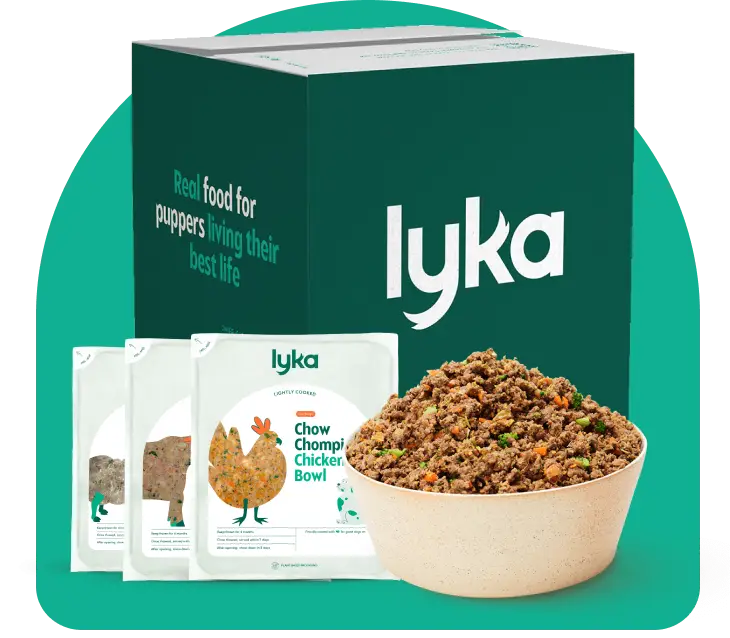
All Lyka meals are designed by Board-Certified Veterinary Nutritionists and made with carefully selected ingredients to support digestion and whole-body health.
Each meal includes fibre from real food ingredients, balanced to support gut health and regular bowel movements.
Our approach includes:
Natural fibre sources like vegetables and seeds
Balanced soluble and insoluble fibre for healthy and regular stools
Gentle cooking for improved nutrient absorption
Meals designed by Board-Certified Veterinary Nutritionists that are backed by science
Custom-portioned meal plans based on life stage, energy levels, body condition, and sensitivities
Read more: The life-changing benefits of real food for dogs
)
Fibre FAQs
Can fibre help dogs with digestive problems?
Yes. Fibre can help dogs with digestive problems by improving stool consistency, supporting gut bacteria, and reducing constipation or diarrhoea. Speak to your vet about how to address digestive problems with fibre to make sure you introduce the right type and amount.
Can too much fibre be bad for dogs?
Yes. Too much fibre in your dog’s diet can cause gas, loose stools, or reduced nutrient absorption. Just like us, dogs need balanced fibre, not excessive fibre.
Is Lyka’s dog food high in fibre?
Lyka meals contain a carefully calculated amount of fibre to support gut health. Sources include natural fibre from vegetables and superfoods, providing digestive support without relying on cheap alternatives like beet pulp or cellulose.
Does fibre help dogs lose weight?
Yes, it can support your dog’s weight loss and weight management. Fibre increases their feelings of fullness, which can reduce hunger and overeating, and support their metabolism through healthy digestion.
Is fibre good for senior dogs?
Yes. In senior dog nutrition, fibre is especially beneficial because it supports regular bowel movements, weight control, and ageing gut health.
Should I add fibre supplements to my dog’s diet?
Only with veterinary guidance. Wholefood fibre is preferred unless your dog has a condition requiring psyllium or therapeutic supplementation.
How should fibre be introduced into a dog’s diet?
Additional fibre should be introduced gradually over 5–7 days with plenty of water to prevent digestive upset or constipation. Lyka meals are complete and balanced and contain a healthy amount of both soluble and insoluble fibre, so there should be no need to add more to their diet. If your pup is experiencing digestive difficulties, speak to your vet for advice and guidance.
Real food fibre for good guts and healthy poos
Fibre isn’t about adding more to your dog’s bowl; it’s about adding the right kind, in the right amount. When fibre comes from real food, it supports digestion, the gut microbiome and healthy, regular poos.
Lyka meals are designed with that balance in mind, with natural fibre from vegetables, seeds, and fruit, so dogs get the fibre they need every day without the guesswork.
If your dog is experiencing digestive issues, understanding fibre intake is a good place to start, with guidance from your vet.
Make an easy change to the fibre in your dog’s diet with meals that already include it – naturally and thoughtfully – in balanced amounts with Lyka.
)
)
)
)
)