)
)
When discussing protein in dogs with chronic enteropathy (CE), we often think of its potential to trigger an immune response — its antigenicity.
But it’s also a source of essential amino acids that can repair the gastrointestinal tract and fuel its gut flora.
So, how can we leverage protein to assist in dogs with CE?
Meet Atlas
)
Case summary
Atlas is a 6-year old, male neutered Rottweiler.
Presented with diarrhoea, vomiting, nausea and 7kg weight loss. IBD / CE was suspected.
Initial symptomatic treatment included anti-emetics and cobalamin supplementation.
A novel protein elimination diet was initiated using another fresh food product. This led to clinical improvement but had palatability issues.
Atlas’ vet recommended Lyka as one of several dietary options for long-term management.
Lyka recommendation
Hypoallergenic Pro (Goat): Lyka’s novel protein diet.
Clinical outcome and rationale
Achieved clinical remission with no recurrence of diarrhoea, vomiting or nausea.
Weight gain to an optimal weight of 47kg.
This case exemplifies a suspected food-responsive chronic enteropathy, where dietary modification alone led to sustained remission.
In this instance, a diet with highly palatable and digestible novel protein (goat), enriched with omega-3s resulted in a positive clinical response.
How protein can help
Protein antigenicity and function
Many cases of CE are thought to stem from hyperactive immune responses to dietary antigens and/or gut microbiota.1
Elimination diets with novel or hydrolysed proteins are therefore recommended in many cases, and to determine whether the enteropathy is food-responsive.
But protein is not just a source of antigens, it supplies amino acids that play a critical role in intestinal health and barrier function:
L‐glutamine is a source of small intestinal epithelial energy, supporting mucosal repair, and barrier integrity.2
L-arginine enhances nitric oxide production that may promote blood flow and tissue repair.3
Digestibility and bioavailability
Protein digestibility refers to how efficiently protein is broken down into amino acids and utilised by the body.
Highly digestible protein may improve amino acid bioavailability while reducing the risk of undigested polypeptides fermenting in the colon, a possible cause of osmotic diarrhoea.
Evidence suggests human-grade whole foods can offer up to 10% higher protein digestibility compared to extruded (kibble) diets.4
High heat processing can alter the digestibility of protein and amino acids to varying degrees.5
Hydrolysed extruded diets improve digestibility and reduce allergenicity compared to standard extruded diets6, but more research is needed on their protein bioavailability compared to whole foods and the metabolic impact of their carbohydrate content.
Clinical tip: Consider the level of protein in your patient’s diet, as it may be beneficial to their overall condition.
Other factors to consider:
Fat content. Restrict especially in dogs with lymphangiectasia and protein-losing enteropathy (PLE).
Fat quality. Omega-3 fatty acids have shown benefits in human chronic GI disease.7
Balanced fibre profile with both fermentable and non-fermentable fibres to promote short-chain fatty acid (SCFA) production (e.g., butyrate)8 and help modulate the immune response.9
Antioxidant and micronutrient density of the diet. Chronic inflammatory disease is likely associated with oxidative stress, and deficiencies in nutrients with antioxidant properties (e.g. vitamin E and zinc) are common in human GI disease.10
Elimination diet trials using a novel protein option such as Lyka’s Hypoallergenic Pro (Goat), especially when macronutrient manipulation fails.
Assessment on a case-by-case basis is recommended and individual dogs may vary. Protein intake may need to be adjusted based on clinical response.
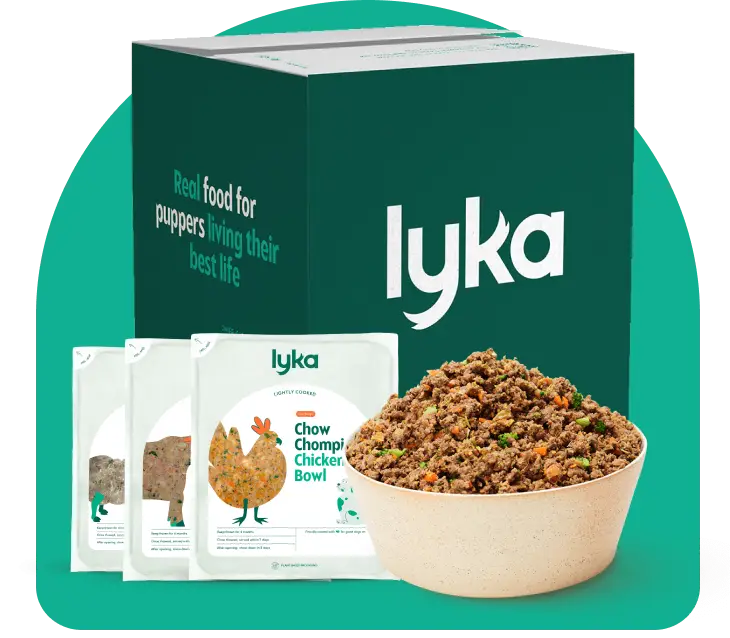
Lyka’s solution — Hypoallergenic Pro
)
Highly digestible, novel protein diet made with goat — ideal for elimination diets.
Formulated by Board-Certified Veterinary Nutritionists.
Highly palatable — 80% of customers still feeding at one month in.
Lyka’s Kangaroo and Chicken are highly digestible, single protein options that may also be considered.
References
Siel D, Beltrán CJ, Martínez E, Pino M, Vargas N, Salinas A, Pérez O, Pereira I, Ramírez-Toloza G. Elucidating the role of innate and adaptive immune responses in the pathogenesis of canine chronic inflammatory enteropathy—a search for potential biomarkers. Animals (Basel). 2022;12(13):1645. doi: 10.3390/ani12131645.
Ziegler TR, Evans ME, Fernández-Estívariz C, Jones DP. Trophic and cytoprotective nutrition for intestinal adaptation, mucosal repair, and barrier function. Annu Rev Nutr. 2003;23:229–261. doi: 10.1146/annurev.nutr.23.011702.073036.
Li JY, Guo YC, Zhou HF, Yue TT, Wang FX, Sun F, Wang WZ. Arginine metabolism regulates the pathogenesis of inflammatory bowel disease. Nutr Rev. 2023;81(5):578–586. doi: 10.1093/nutrit/nuac070.
Do S, Phungviwatnikul T, de Godoy MRC, Swanson KS. Nutrient digestibility and fecal characteristics, microbiota, and metabolites in dogs fed human-grade foods. J Anim Sci. 2021;99(2):skab028. doi: 10.1093/jas/skab028.
Oba PM, Utterback PL, Parsons CM, de Godoy MRC, Swanson KS. Chemical composition, true nutrient digestibility, and true metabolizable energy of chicken-based ingredients differing by processing method using the precision-fed cecectomized rooster assay. J Anim Sci. 2019;97(3):998–1009. doi: 10.1093/jas/sky461.
Hsu C, Utterback PL, Parsons CM, Marx F, Guldenpfennig R, de Godoy MRC. Standardized amino acid digestibility and protein quality in extruded canine diets containing hydrolyzed protein using a precision-fed rooster assay. J Anim Sci. 2023;101:skad289. doi: 10.1093/jas/skad289.
Marton LT, de Alvares Goulart R, Alves de Carvalho AC, Barbalho SM. Omega fatty acids and inflammatory bowel diseases: an overview. Int J Mol Sci. 2019;20(19):4851. doi: 10.3390/ijms20194851.
Montserrat-Malagarriga M, Castillejos L, Salas-Mani A, Torre C, Martín-Orúe SM. The impact of fiber source on digestive function, fecal microbiota, and immune response in adult dogs. Animals (Basel). 2024;14(2):196. doi: 10.3390/ani14020196.
Yin L, Laevsky G, Giardina C. Butyrate suppression of colonocyte NF-kappa B activation and cellular proteasome activity. J Biol Chem. 2001;276(48):44641–44646. doi: 10.1074/jbc.M105170200.
Wu Y, Liu C, Dong W. Adjunctive therapeutic effects of micronutrient supplementation in inflammatory bowel disease. Front Immunol. 2023;14:1143123. doi: 10.3389/fimmu.2023.1143123.
)