)
)
Low-fat diets are the cornerstone treatment and preventative strategy for chronic pancreatitis, especially in the presence of confounding factors like hyperlipidaemia.
But we’re uncovering that it’s not just about fat content. Quality matters too - and other nutritional factors are crucial to reducing recurrence.
Research spotlight
Omega-3 fatty acids, a form of polyunsaturated fat, may play a protective role in canine pancreatitis when introduced gradually. This is supported by both animal and human models, though further studies should be considered in dogs.
🔬 STUDY 1
The Role of Omega-3 Fatty Acids in Acute Pancreatitis: A Meta-Analysis of Randomized Controlled Trials (Lei et al., 2015)1
Method
Meta-analysis including 364 humans diagnosed with acute pancreatitis.
Results
Those supplemented with omega 3 fatty acids in controlled trials showed:
Decreased mortality
Reduced infectious complications
Shorter hospitalisation
Conclusion: Omega 3 fatty acids may play a beneficial role in acute pancreatitis in humans, though larger scale studies are encouraged.
🔬 STUDY 2
Supplementation of omega-3 and dietary factors can influence the cholesterolemia and triglyceridemia in hyperlipidemic Schnauzer dogs: A preliminary report (de Albuquerque et al., 2021)2
Method
18 dogs with hyperlipidaemia (associated with an increased risk of pancreatitis).
Fed either a low-fat or moderate-fat diet, supplemented with omega-3 fatty acids for 90 days.
Plasma triglycerides (TG) and total cholesterol (TC) were measured before and after treatment.
Results
Triglycerides and cholesterol were reduced in both diets supplemented with omega-3 fatty acids, despite a difference in overall fat content.
Conclusion: Omega-3 supplementation may be beneficial to dogs with primary hyperlipidaemia (a risk factor for pancreatitis).
TAKE HOME
Dietary fat content is crucial, but it’s not the full story.
So, how can you assess diets for their fat quality? What else can we assess when looking for diets for chronic or recurrent canine pancreatitis?
Quick recap on canine pancreatitis
Pancreatitis is defined as inflammation of the pancreas. In dogs, it also describes disorders involving necrosis or fibrosis.
It is broadly categorised by chronicity:
Acute pancreatitis
Sudden onset, severe clinical signs and systemic complications.
Chronic pancreatitis
Mild clinical signs, slow or insidious onset.
Progressive and irreversible damage may occur.
Diagnosis of pancreatitis can be challenging, but generally based on a combination of clinical signs, haematology, biochemistry and canine pancreatic lipase immunoreactivity (cPLI).
Risk factors
Genetics
Hyperlipidaemia (either a cause or result of pancreatitis)
Medication (e.g. potassium bromide3)
Trauma
Pancreatic ischaemia
Nutritional factors (see below)
Nutritional risk factors
Nutrition plays a preventative, causative, and therapeutic role in canine pancreatitis.
Obesity4
Likely due to the pro-inflammatory properties of adipose tissue and adipokines.
Dietary indiscretion
The ingestion of unusual food items, intakes of table scraps and garbage eating is associated with episodes of acute pancreatitis5
High fat, low protein diets
Diets that are high in fat but low in protein carry a higher risk of pancreatitis than diets that are high in both protein and fat4,5,6.
The individual role of fat has not been reliably demonstrated in practice7
A crossover study, in which healthy dogs were fed four diets differing in fat for a one week per period, did not find any differences in blood PLI, TLI or gastrin concentrations8.
Recommending Low Fat Diets for Pancreatitis: When and How?
Despite unclear mechanisms, low-fat diets are widely accepted as the primary treatment for pancreatitis. However, there is ongoing debate regarding when to implement them and what defines an appropriate formulation.
When to recommend a low fat diet
Acute pancreatitis
Low fat, highly digestible diets are recommended in the initial phase of acute pancreatitis, especially in hyperlipidaemic cases and until we have further diagnostic information.
Once the acute episode resolves, if the inciting factor is identified (e.g., dietary indiscretion) and there is no evidence of underlying hyperlipidaemia or other confounding factors, a gradual reintroduction to the dog’s previous, nutritionally balanced diet may be appropriate.
This transition should occur slowly over several days.
Previous theories suggested “resting the pancreas” by witholding food. However, studies have shown that early enteral feeding is beneficial and recommended in the vast majority of acute cases9.
Chronic or recurrent pancreatitis
In dogs with chronic or recurrent (episodic) pancreatitis, a long-term, low-fat diet is typically recommended.
These patients often present with, or are at increased risk of comorbidities such as:
Obesity
Diabetes mellitus
Hyperlipidaemia
Exocrine pancreatic insufficiency (EPI)
Each of these conditions may have distinct nutritional needs that must be considered when selecting an appropriate diet.
Given the epidemiological link between obesity and pancreatitis4,5, a calorie-restricted diet lower in fat than the dog’s previous intake is indicated until an ideal body condition score is reached.
Be aware that many commercial therapeutic diets are high in fat to balance macronutrient requirements, such as those restricted in protein for renal disease or some diabetic foods.
How to assess fat content for your patient
Fat content is relative
The definition of a “low-fat” diet is not absolute, but should be considered relative to the patient’s previous dietary intake. This makes a comprehensive diet history essential when evaluating or recommending nutritional modifications.
Clinical tip: Evaluate fat content on a %kcal ME (metabolisable energy) basis.
This allows you to compare diets like-for-like since it allows for comparison between foods with varying amounts of moisture, fibre and ash (such as between fresh food and kibble).
Pet food manufacturers should be able to share this value.
How low is low fat?
While a diet containing <20% fat on a metabolisable energy (ME) basis is typically classified as “low fat,” it’s important to emphasise that what qualifies as “low” should be assessed relative to the individual dog’s previous diet.
Generally speaking, a diet low enough in fat is one that:
Maintains fasting triglycerides within a reasonable range
Controls chronic pancreatitis
Prevents episodes of recurrent or acute pancreatitis.
One efficient, empiric approach is halve the fat concentration (on an ME basis) from the patient’s previous diet.
This makes a thorough diet history of paramount importance in these cases; to understand their baseline.
If the patient is already on a very low fat diet, consider other factors which may be contributing to recurrent or chronic pancreatitis (see “Risk factors”, “Nutritional risk factors” and “Other nutritional considerations).
In some cases, there may be no suitable commercial options available and a balanced diet formulated by a Board-Certified Veterinary Nutritionist® may be the most appropriate option.
Fat quality matters too
When evaluating diets for dogs with chronic pancreatitis or hyperlipidaemia, consider the quality of fat, not just the total fat content.
Fats vary in digestibility, which can be influenced by processing methods10—particularly high-heat treatment—and oxidation.
Fresh sources of omega-3 fatty acids, such as EPA and DHA from fish oil, are highly digestible and have demonstrated pancreo-protective effects in both animal and human studies when titrated gradually1,11,12.
Omega-3s may also help to reduce plasma triglyceride and cholesterol concentrations in dogs with hyperlipidaemia, although further veterinary-specific research is needed2.
How to assess fat quality for your patient
Omega 6:3 ratio
A lower omega-6: omega-3 ratio is preferred - ideally less than 6:1 - indicating a higher proportion of omega-3s, with their anti-inflammatory and potentially lipid-altering properties.
Source and Processing Method
Prioritise fresh fat sources such as fish oil, flaxseed oil, and lightly processed animal fats.
Avoid fats exposed to excessive heat or long-term oxidation. Fats processed in this way can often be present in extruded diets.
Other nutritional factors
Carbohydrates
Dogs with chronic pancreatitis are at a higher risk of developing diabetes mellitus, and vice versa13.
Increased fructosamine (due to chronic hyperglycaemia) has been associated with increased cPLI in diabetic dogs14, possibly indicating pancreatic inflammation.
The carbohydrate content of the diet should be carefully considered and possibly restricted in line with the patient’s biochemistry and clinical response.
Protein
Proteins (peptides) stimulate cholecystokinin, a key mediator of pancreatitis. However, the relationship between cholecystokinin stimulation and pancreatitis in dogs is not clear.
In patients that are refractory to fat and carbohydrate manipulation, a lower protein diet may be considered.
If your patient requires a low-protein, low-fat diet, formulating a diet with a Board-Certified Veterinary Nutritionist® may be appropriate.
Fibre
Mixed fermentable fibres can help address intestinal dysbiosis which can accompany chronic GI upset (such as from pancreatitis) and EPI in dogs15.
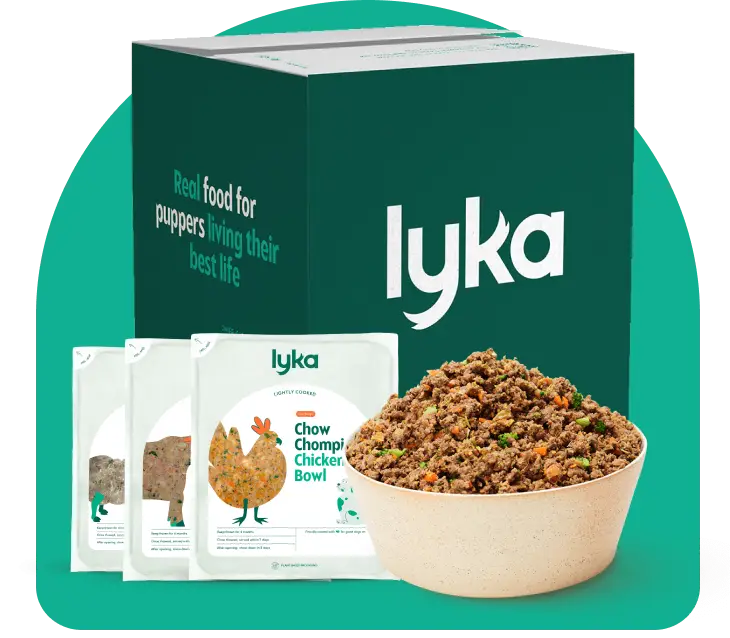
A fresh solution
While Lyka’s highly digestible, fresh meals are not typically recommended during the acute phase of pancreatitis, they may be appropriate:
In chronic or recurrent pancreatitis, as a long term diet.
For managing hyperlipidaemia and obesity.
Once recovered from acute pancreatitis, in select cases.
Kangaroo
)
Fat = 9% (dry matter) | 22% (kcal ME)
Omega 6:3 = 1.1:1
Carbohydrates = 11% (dry matter) | 9.5% (kcal ME)
Chicken
)
Fat = 12% (dry matter) | 26% (kcal ME)
Omega 6:3 = 2.3:1
Carbohydrates = 11% (dry matter) | 9.1% (kcal ME)
Comparing diets for idiopathic hyperlipidaemia
Example: 10kg dog
)
Fresh solutions to weight management
Given the strong association between obesity and pancreatitis, proactive weight management is essential in preventing recurrence.
Lyka’s meals are:
Pre-portioned to support controlled caloric intake
Low in caloric density, aiding in weight reduction and maintenance while promoting satiety.
Nutrient-dense to support steady and safe weight loss.
These features make Kangaroo and Chicken formulations well-suited for managing dogs with chronic pancreatitis, particularly those requiring concurrent weight loss or maintenance.
References
Lei QC, Wang XY, Xia XF, Zheng HZ, Bi JC, Tian F, Li N. The role of omega-3 fatty acids in acute pancreatitis: a meta-analysis of randomized controlled trials. Nutrients. 2015 Mar 31;7(4):2261-73. doi: 10.3390/nu7042261. PMID: 25835048; PMCID: PMC4425143.
de Albuquerque P, De Marco V, Vendramini THA, Amaral AR, Catanozi S, et al. (2021) Supplementation of omega-3 and dietary factors can influence the cholesterolemia and triglyceridemia in hyperlipidemic Schnauzer dogs: A preliminary report. PLOS ONE 16(10): e0258058.
Gaskill CL, Cribb AE. Pancreatitis associated with potassium bromide/phenobarbital combination therapy in epileptic dogs. Can Vet J. 2000 Jul;41(7):555-8. PMID: 10907578; PMCID: PMC1476191.
Hess RS, Kass PH, Shofer FS, Van Winkle TJ, Washabau RJ. Evaluation of risk factors for fatal acute pancreatitis in dogs. J Am Vet Med Assoc. 1999 Jan 1;214(1):46-51. PMID: 9887939.
Lem KY, Fosgate GT, Norby B, Steiner JM. Associations between dietary factors and pancreatitis in dogs. J Am Vet Med Assoc. 2008 Nov 1;233(9):1425-31. doi: 10.2460/javma.233.9.1425. PMID: 18980495. 4
Pancreatitis: Pathophysiology In: Applied Veterinary Clinical Nutrition, 2e (ed. A.J. Fascetti, S.J. Delaney, J.A. Larsen, and C. Villaverde), 301. Hoboken, NJ: John Wiley & Sons, Inc.
Pancreatitis: Etiology and Pathophysiology In: Textbook of Veterinary Internal Medicine, 8e, vol. 2 (ed. S.J. Ettinger and E.C. Feldman), 1681-1682. St. Louis, MO: Elsevier Saunders.
James FE, Mansfield CS, Steiner JM, Williams DA, Robertson ID. Pancreatic response in healthy dogs fed diets of various fat compositions. Am J Vet Res. 2009 May;70(5):614-8. doi: 10.2460/ajvr.70.5.614. PMID: 19405900.
Harris JP, Parnell NK, Griffith EH, Saker KE. Retrospective evaluation of the impact of early enteral nutrition on clinical outcomes in dogs with pancreatitis: 34 cases (2010-2013). J Vet Emerg Crit Care (San Antonio). 2017 Jul;27(4):425-433. doi: 10.1111/vec.12612. Epub 2017 May 16. PMID: 28510290.
Geary EL, Swanson KS, Templeman J. 193 Apparent Total Tract Nutrient Digestibility of Frozen Raw, Freeze-Dried Raw, Fresh, and Extruded Dog Foods and Their Effects on Fecal Characteristics and Metabolites of Adult Dogs. J Anim Sci. 2023 Nov 6;101(Suppl 3):101–2. doi: 10.1093/jas/skad281.123. PMCID: PMC10632971.
Weylandt KH, Nadolny A, Kahlke L, Köhnke T, Schmöcker C, Wang J, Lauwers GY, Glickman JN, Kang JX. Reduction of inflammation and chronic tissue damage by omega-3 fatty acids in fat-1 transgenic mice with pancreatitis. Biochim Biophys Acta. 2008 Nov;1782(11):634-41. doi: 10.1016/j.bbadis.2008.08.011. Epub 2008 Sep 12. PMID: 18832028; PMCID: PMC2614880.
Al-Leswas D, Eltweri AM, Chung WY, Arshad A, Stephenson JA, Al-Taan O, Pollard C, Fisk HL, Calder PC, Garcea G, Metcalfe MS, Dennison AR. Intravenous omega-3 fatty acids are associated with better clinical outcome and less inflammation in patients with predicted severe acute pancreatitis: A randomised double blind controlled trial. Clin Nutr. 2020 Sep;39(9):2711-2719. doi: 10.1016/j.clnu.2018.04.003. Epub 2018 Apr 27. PMID: 32921364.
Johnson-Pitt A, Catchpole B, Davison LJ. Exocrine pancreatic inflammation in canine diabetes mellitus - An active offender? Vet J. 2024 Dec;308:106241. doi: 10.1016/j.tvjl.2024.106241. Epub 2024 Sep 5. PMID: 39243807.
Kim J, Chae Y, Lee D, Koo Y, Cha S, Yun T, Yang MP, Kang BT, Kim H. Association between Hyperglycemia and Canine Serum Pancreatic Lipase Immunoreactivity Concentration in Diabetic Dogs. J Am Anim Hosp Assoc. 2023 Sep 1;59(5):241-248. doi: 10.5326/JAAHA-MS-7365. PMID: 37708476.
Isaiah A, Parambeth JC, Steiner JM, Lidbury JA, Suchodolski JS. The fecal microbiome of dogs with exocrine pancreatic insufficiency. Anaerobe. 2017 Jun;45:50-58. doi: 10.1016/j.anaerobe.2017.02.010. Epub 2017 Feb 20. PMID: 28223257.
)