)
)
Quick on their feet and even quicker to learn — Australian Kelpies don’t just want a challenge, they need one. Whether they’re herding sheep or smashing agility records, these high-octane dogs thrive on both physical and mental stimulation.
But here’s the catch: without the right outlet — or the right support — that drive can tip into mischief fast. In this guide, we’ll unpack what it really takes to train a Kelpie, from playing to their strengths to supporting focus and learning with real food. Whether you’re working with a new pup or fine-tuning an adult’s routine, you’ll find smart, practical strategies to help your Kelpie thrive well into their golden years.
Read more: Kelpie breed insights: care, personality, and expert tips
Kelpie temperament and trainability
Driven, energetic, and supremely smart, Kelpies are one of Australia’s most iconic and capable working breeds. They were bred for stamina and independence — qualities that make them impressive problem-solvers, but also dogs who won’t sit idle.
Kelpies are usually very responsive to training, especially when tasks are mentally stimulating and physically engaging. They pick up commands quickly and love a challenge, but their high energy can sometimes make them impulsive or reactive without the right outlet.
A lack of structure or boredom can lead to destructive behaviours, so consistent training and daily enrichment are essential.
But don’t be intimidated — their eagerness to work with their humans makes them incredibly rewarding to train. With consistent, force-free methods and rewards that match their drive (like play or nutritious food), your Kelpie will not only learn fast but thrive in your care.
)
Health considerations that can affect training
While Kelpies are generally robust, a few health concerns can impact training and behaviour, including:
Hip dysplasia
Joint issues, like hip dysplasia, are common in active breeds. This condition is where the ball and socket joint don’t fit snugly together. An underdeveloped socket causes the hip to slip out of place, affects movement and causes discomfort and pain.
Hip dysplasia presents in degrees of severity, with the most serious cases often requiring surgery. If your pup has joint issues, their willingness to engage in certain activities may be affected.
Try this:
Although you can’t change your dog’s genetics, you can support their joint health with their diet. Choose meals with anti-inflammatory and antioxidant properties to reduce swelling and counteract cellular damage caused by free radicals, like curcumin and Omega-3 fatty acids.
Lyka’s Joint Supplement is a great way to boost your dog’s nutrition with targeted bioactive ingredients, including curcumin from turmeric, Omega-3 from green-lipped mussels, and Boswellia extract to support joint health.
Read more: Hip Dysplasia: how can your dog's diet help?
Dental disease
Dental disease is a common problem in all dogs, not just Kelpies: 80% of dogs over the age of 3 have a form of dental disease. Tartar and plaque build-up on teeth can cause inflammation, infection, and can lead to loose teeth if left unchecked.
Try this:
Daily brushing with dog-friendly toothpaste supports your Kelpie’s oral health. Couple that with dental chews like Lyka’s Turkey Dental Jerky or Busy Beefies can help to control plaque and tartar. Real food diets containing kelp (Ascophyllum nodosum) have been shown to reduce both calculus and plaque accumulation in dogs.
Obesity or overweight
Kelpies are highly energetic dogs that need ample exercise to stay fit, healthy, and mentally occupied. But if they’re not getting enough exercise, eating too much food, or a combination of both, they can gain unnecessary weight.
Try this:
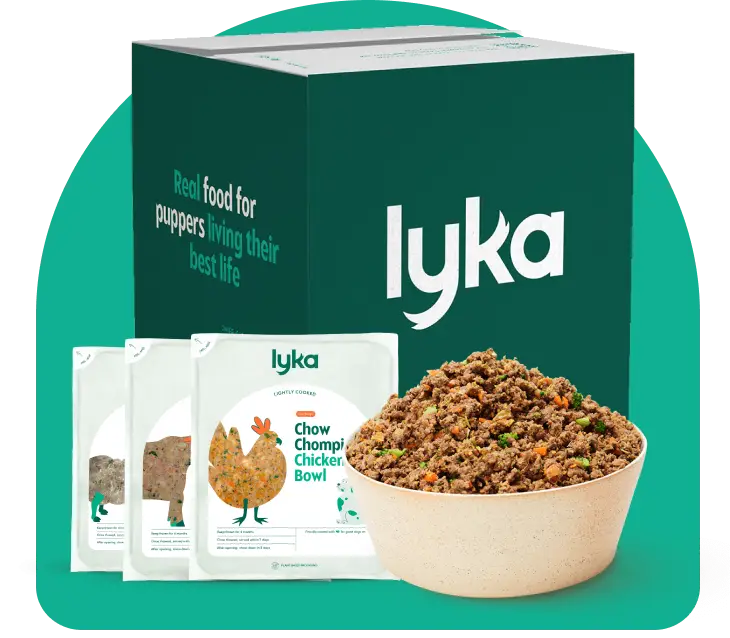
Feed your pup portion-controlled meals to ensure they’re getting exactly the right nutrients. Lyka meals are custom-portioned, taking the guesswork out of mealtimes and giving you peace of mind knowing your pup is getting everything they need with no excess.
High-quality diets provide your Kelpie with energy from human-grade animal protein and low-glycaemic index carbohydrate sources that also keep your dog feeling fuller for longer.
If your Kelpie seems unusually distracted, hesitant, or reactive, it’s worth checking with your vet to rule out any underlying issues.
How real food fuels your Kelpie’s focus
Just like us, dogs learn best when they’re feeling healthy, balanced and energised. Diet plays a big role in your pup’s ability to focus, stay calm, and retain information.
Kelpies benefit from:
Steady energy sources like butternut squash and sweet potato, which have a low glycaemic load and help release energy slowly.
Essential fatty acids like DHA and EPA (omega-3s from fish, mussels, or fish oil) support brain health and development, memory, and learning.
Fresh, bioactive nutrients from ingredients like shiitake mushrooms and blueberries, support immunity, skin health, and overall wellbeing.
“A fresh food diet packed with brain-boosting nutrients supports your dog’s ability to learn and adapt. Omega-3s, especially DHA, are critical for memory and cognitive function.”
– Dr Alex England, Lyka Veterinarian, BVetMed MANZCVS (Small Animal Veterinary Practice)
Learn more about Dr Alexander England and his veterinary experience.
All Lyka meals are formulated by Board-Certified Veterinary Nutritionists to provide complete and balanced nutrition for learning, growth, and everyday health.
Read more: What do Kelpies eat? Breed-specific nutrition tips
)
Exercise first for improved focus
Kelpies are high-drive dogs who often need to burn off energy before they can focus. A training session will be far more successful after they’ve had a chance to run, sniff, or play.
Options include:
Off-leash runs in a secure area
Agility or obedience drills, or herding games
Fetch or structured tug sessions
This pre-training outlet can help to prevent frustration and enhance their ability to concentrate.
Training tips for Kelpies
Training a Kelpie can feel like trying to keep up with a canine rocket — but with patience and purpose, it’s a deeply fulfilling process.
Keep sessions short, sweet, and full of positive vibes. Here’s what works best:
Positive reinforcement
This is the gold standard for training. Marking good behaviour with rewards like praise, affection, treats, or continued interaction, teaches your pup how to behave and supports a strong and positive relationship.
Double up on rewards to mark excellent responses from your Kelpie, like praise and a pat, or praise and a treat.
Find their favourite motivator
Discovering your pup’s hierarchy of high-value rewards is a great way to keep your Kelpie motivated. Is it a nibble of roast chicken, their favourite squeaky toy, or playtime with you?
Train at the right time
Sometimes dogs don’t have the energy or desire to learn, especially if they’re too tired, too full, or hot and bothered.
Mental enrichment through training can be tiring for dogs, so find the right time to train and stop if you notice your dog starting to lose focus or fatigue.
Stay consistent
Consistency is key to training. Not just in setting your expectations, but in using the same verbal and non-verbal cues.
Be playful and engaging
Dogs are sensitive souls that can pick up on your mood. Keep your sessions fun and your positive energy will be contagious.
Watch their body language
If your Kelpie starts to show signs of stress or tiredness, give them a break. If they’ve reached saturation point, it can be counterproductive to persevere. You can always come back to the training at another time.
Training your Kelpie puppy
Kelpie puppies are bundles of alert, eager energy — and early training is your golden opportunity to shape that potential.
What works?
A regular toilet routine
Positive crate training for safe sleep and downtime
Early and controlled socialisation with people, dogs, sounds, places and situations
A consistent training routine to keep their minds and bodies engaged
Kelpies are sensitive and intuitive, so avoid harsh methods. Focus on trust, reward, and calm consistency.
)
Training your adult Kelpie
Just because your Kelpie’s out of puppyhood doesn’t mean the training stops. In fact, ongoing mental stimulation is essential to keep their mind sharp and behaviour balanced.
This might look like:
Reinforcing polite greetings at the door
Learning new tricks or games
Adjusting to life changes, like moving house
Training for mobility support, like using a ramp in senior years
Dogs have neuroplasticity, meaning they’re capable of learning at any age. Keep training light and engaging, and celebrate progress — no matter how small.
When to call in a trainer or behaviourist
Not sure if your Kelpie’s quirks are just stubbornness — or something deeper?
A trainer is your go-to for obedience, manners, and routine behaviours. A qualified behaviourist, on the other hand, is best for issues like:
Reactivity
Anxiety or phobias
Aggression
Resource guarding
They work closely with your vet to address underlying causes and create a tailored plan. The earlier you seek support, the easier it is to create lasting change.
“If training your dog is very challenging, it may be worth considering a trainer or a behaviourist. A trainer can help you identify what may be triggering their behaviour and show you how to help your dog cope in those situations. The solution may be as simple as reframing what we expect from our dogs and our behaviours around them.”
– Laura V, qualified dog behaviourist
New to Lyka? Let’s rethink dog food together
Training your Kelpie is a journey — one that requires consistency, creativity, and compassion. Whether you’re navigating house training with a stubborn puppy or teaching your senior dog new routines, every small win is a step toward a calmer, more connected life together.
And remember, a well-fed brain is a trainable brain. Supporting your Kelpie’s learning with fresh, real food meals helps unlock their full potential.
Lyka nourishes hundreds of Kelpies across Australia – from energetic pups to seniors in their golden years – they’re all thriving on Lyka.
)
)
)
)