)
)
Key summary
Is fresh food automatically nutritionally complete?
No. A fresh diet still needs to provide all essential nutrients in the right amounts for the dog’s life stage. Home-prepared and commercial fresh diets can vary considerably in nutritional adequacy.
What should vets look for in formulation?
Start with who formulated the diet and which nutritional standards it meets. Look for formulation by a board-certified veterinary nutritionist, and whether the diet is designed to meet recognised standards such as AAFCO or FEDIAF. Feeding trials and finished-product testing can provide further evidence that the food performs as intended when fed to dogs.
How does cooked fresh compare with raw?
Commercial cooked fresh food and raw food should be considered separately. Controlled cooking can reduce microbial risk, while raw diets have documented concerns around bacterial contamination and zoonotic exposure.
What testing can strengthen confidence in a diet?
Depending on the product, useful evidence may include feeding trials, digestibility studies, palatability testing, urinary relative supersaturation testing, and controlled clinical research.
How should vets discuss fresh feeding with clients?
Focus on the individual diet rather than the category. Ask what the food contains, how it is made, what testing has been completed, and whether it suits the individual patient.
Not All Fresh Food Is Equal: A Veterinary Guide to Quality and Safety
Fresh feeding is growing quickly, but “fresh” alone tells us very little about the quality of a diet.
Two meals may look similar in the bowl while being very different in how they are formulated, manufactured, and tested.
That makes clinical assessment especially important.
In the final article in our Science of Fresh series, we look at the questions veterinary teams can use to assess a fresh diet, from who formulated it to how the finished food is tested.
Start with nutritional adequacy
Fresh ingredients can look reassuringly familiar. Meat, vegetables, oils, and supplements may resemble the foods pet parents prepare for themselves. That visual familiarity can create an impression of nutritional quality before the formulation has been assessed.
Dogs, however, require nutrients in specific amounts and proportions.
Calcium and phosphorus are a familiar example. Both are essential, yet the amount and balance between them become particularly important during growth. Trace minerals, vitamins, essential amino acids, and fatty acids also need to be supplied appropriately.
A fresh diet developed without adequate nutritional expertise can therefore look excellent in the bowl while still being incomplete.
For veterinary teams, the first questions remain straightforward: “Is the diet complete and balanced for this dog’s life stage, and who formulated it?” Those questions should come before ingredient aesthetics or marketing claims.
Look beyond formulation on paper
Meeting a nutrient profile gives us one layer of evidence. Feeding the finished diet gives us another.
Feeding trials allow researchers to assess dogs consuming the food over a defined period rather than relying solely on calculated nutrient content. Digestibility studies can also be useful. A nutrient listed in the formulation only helps the dog if the body can actually use it. This is particularly relevant when diets differ in ingredients and processing methods.
Other testing may answer more specific questions. Urinary relative supersaturation, or RSS, testing can help assess how a diet influences the urinary environment associated with crystal formation. Palatability studies can show whether dogs will reliably eat the food they are being offered.
No single test answers every nutritional question. But together they build a more complete picture of how a finished diet performs.
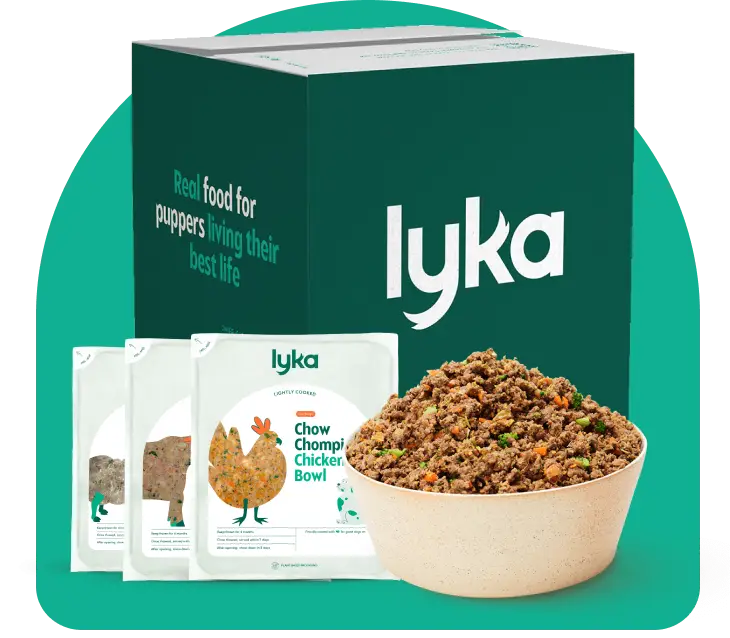
Lyka meals are complete and balanced for all life stages and have undergone an AAFCO feeding trial. Lyka has also completed digestibility studies, palatability testing, and urinary RSS testing.
Fresh and raw need separate conversations
Pet parents may use “fresh” and “raw” interchangeably, but the safety profiles are different.
Raw meat can contain pathogenic bacteria, including organisms that may affect both animals and people. Contamination can also extend beyond the food itself through bowls, preparation surfaces, faeces, and handling. These risks are important in households with young children, older people, pregnant people, or anyone who is immunocompromised.
A review of raw diets for dogs and cats identified microbiological hazards associated with raw meat-based feeding and highlighted the potential for zoonotic transmission1.
Commercial cooked fresh diets take a different approach. Controlled heating can reduce pathogenic organisms while producing a food that retains the moisture and physical format associated with fresh feeding.
Food safety then depends on more than cooking temperature alone. It also depends on what happens after cooking, including cold-chain control, hygiene, and batch testing.
Lyka meals are gently cooked in HACCP-certified Australian facilities and undergo independent pathogen testing before release.
Ask what has actually been studied
Nutrition claims vary considerably in strength. Some are based on the theoretical properties of an ingredient. Others come from research on nutrients that appear in the formulation but have never been studied in the finished food.
The strongest evidence becomes more relevant to the product as the research moves closer to what the dog actually eats. For example, a study of omega-3 fatty acids can tell us useful things about EPA and DHA. It does not automatically tell us how a particular commercial diet affects dogs. Research using the finished diet can answer that question more directly.
2. Jobe MT, Downs KM. (2026). Systematic Review and Meta-Analysis of Quality Claims Associated with Fresh Pet Food: Evaluating Scientific Evidence for Additives, Ingredient Quality, and Effects of Processing in Pet Nutrition. Animals. 16(1):41. doi:10.3390/ani16010041
“Beyond just the intensity of the processing, the type of ingredient and method of processing actually matter more... We need to look at ingredient quality, safety, adherence to nutritional standards, and digestibility… This, for me, highlights the need for pet food companies to do their own research on the products, to fully understand the quality.” – Dr. Alex England
The University of Sydney randomised crossover study fed dogs Lyka and an extruded kibble diet during separate study periods3. Dogs showed differences in faecal consistency, microbiome diversity, post-meal glucose, and gut-hormone responses between the two diets.
That type of study gives veterinary teams evidence about the complete product rather than relying solely on what individual ingredients might do. Longer-term studies are still needed, particularly where the outcome of interest is chronic disease or healthspan.
Manufacturing standards belong in the nutrition conversation
A well-designed formulation still needs to be produced consistently. Commercial diets are manufactured at scale, which means variation in ingredients, storage, handing, and quality control can all affect the finished food.
HACCP systems identify potential food-safety hazards and establish controls designed to reduce them during production. Batch testing adds another layer of assurance by checking the food after manufacture.
These details may feel far removed from the consult room, but they help answer a practical question: can the formulation the nutritionist designed be delivered safely and consistently in every pack?
For veterinary teams assessing a fresh-food company, manufacturing standards are therefore worth asking about directly.
Individual patients still come first
Even a well-formulated, well-tested diet will not suit every dog in every situation. Some patients require more individual nutritional planning, including dogs with gastrointestinal disease, pancreatitis, renal disease, urinary conditions, or suspected adverse food reactions.
Life stage also changes the assessment. Growth places different nutritional demands on the diet than adult maintenance. The presence of a medical condition does not automatically rule fresh food in or out, but it changes the questions that need to be asked. That is where veterinary guidance becomes particularly valuable.
“When it comes to client factors, one thing I really want to understand is time and convenience: do they have the time to be dealing with complex diet plans? If their time is short, I’ll choose a diet that’s simple and easy to follow, because I know as soon as they go out of the consult room, if it’s complex it won’t be followed.” – Dr. Alex England
Pet parents are increasingly interested in fresh feeding, and many will encounter it before the subject ever comes up in a consult. Helping them assess the quality of what they are considering can be more useful than debating the category as a whole.
A practical way to assess fresh diets
When a client asks about a fresh diet, a few questions can quickly clarify how much confidence to place in it:
Is it complete and balanced for the dog’s life stage?
Who formulated it, and what nutrition expertise do they have?
Has the finished diet undergone feeding or digestibility studies?
How is food safety controlled during manufacturing?
Are batch testing and pathogen testing carried out?
Has the finished product been studied in dogs?
Is the diet appropriate for this particular patient?
These questions shift the conversation away from how the ingredients look and towards what the product can demonstrate.
A diet should earn clinical confidence through its formulation, manufacturing standards, and evidence base.
Webinar
👉 Watch the full webinar on The science of fresh: from bowl to microbiome, to explore the evidence behind fresh feeding in more detail.
References
Davies RH, Lawes JR, Wales AD. (2019). Raw diets for dogs and cats: a review, with particular reference to microbiological hazards. Journal of Small Animal Practice. 60(6):329–339. doi:10.1111/jsap.13000
Jobe MT, Downs KM. (2026). Systematic Review and Meta-Analysis of Quality Claims Associated with Fresh Pet Food: Evaluating Scientific Evidence for Additives, Ingredient Quality, and Effects of Processing in Pet Nutrition. Animals. 16(1):41. doi:10.3390/ani16010041
Campbell L, Thompson M, Muir M, Raubenheimer D, Holmes A. (2026). Diet-induced metabolic and faecal microbiome responses in pet dogs fed a minimally processed versus extruded kibble diet. Frontiers in Veterinary Science. 13:1734572. doi:10.3389/fvets.2026.1734572
)
)
)
)