)
)
Key summary
Why do so many canine weight-loss plans fail?
Many fail not because the biology is wrong, but because the plan is hard to maintain. Persistent hunger, pet parent guilt, treat creep, and poor palatability can quietly undermine even well-designed programmes.
Why is hunger such a major barrier?
Hunger is biologically regulated, not simply a behavioural issue. Reduced-calorie diets that fail to adequately support satiety can leave dogs persistently hungry, vocal, and food-seeking, making long-term adherence difficult.
How does diet influence appetite regulation?
Appetite is controlled through gut-brain hormonal signalling. Higher-protein, moisture-rich, highly digestible diets can improve satiety, reduce hunger signals, and help dogs feel fuller on fewer calories compared with traditional dry therapeutic diets.
Why does compliance matter clinically?
Treats, extras, and inconsistent portion control can contribute 10–30% of daily calorie intake during weight-loss attempts. A plan that ignores real-world behaviour may look effective on paper but fail in practice.
What does effective canine weight management require?
Successful weight management demands a practical, sustainable approach that addresses both a dog’s biology and their behaviour. Managing hunger, allowing realistic flexibility, and designing plans owners can consistently follow are essential for long-term success.
Making canine weight loss stick: Why restriction alone isn’t enough
Most weight-loss programmes fail long before biology does. Hunger, boredom, guilt, and inconsistent treats quietly undo even well-designed plans.
Our final newsletter in our Rethinking Canine Weight Management: More than a Calorie Equation series rounds off with a dive into the realities of feeding a reduced energy diet, and what it takes to make a weight-loss plan sustainable.
Hunger is a biological signal, not poor discipline
Many weight-loss diets increase fibre to dilute calories. While this can reduce energy density, it often fails to adequately suppress hunger hormones. Elevated ghrelin and insufficient satiety signalling leave dogs persistently hungry, vocal, and food-seeking.
“Of course, it’s always possible in a laboratory controlled environment. But people have a dog at home. When you choose dry food, you will always provide a smaller amount compared to wet. Wet, or fresh or homemade, will provide about four times the amount. ” – Dr Géraldine Blanchard
This places owners in an impossible position. Treating resumes, portions creep up, and adherence to the diet collapses.
The gut-brain axis matters
Appetite is regulated through complex gut-brain signalling involving hormones such as ghrelin and pancreatic polypeptide. Diets higher in protein, moisture, and digestibility have been shown to reduce hunger signals and increase satiety markers compared with dry kibble1.
)
Fresh, high-protein diets also slow gastric emptying and reduce calorie density, allowing dogs to feel fuller on fewer calories.
Even the best plan fails if no one can stick to it
Studies consistently show that treats and extras account for 10–30% of daily caloric intake during weight-loss attempts2. Prohibiting treats altogether is rarely realistic, and when plans fail to accommodate real life, they fail in practice.
“When you treat obesity, you will have to decrease the energy by 20% because it is neutered, because it is sedentary, and depending on the breed – and all this is cumulative. And when you reduce that, they have the same appetite as if they were not neutered, not sedentary, and certainly not a labrador.” – Dr Géraldine Blanchard
Palatability is equally important. Dogs that refuse food, lose interest, or become bored are unlikely to stay compliant long term. Independent trials show markedly higher preference for fresh diets over traditional therapeutic weight-loss kibbles.
Rotation and variety
Dietary monotony reduces engagement. Offering controlled rotation of appropriate recipes not only improves compliance but may also support microbiome diversity, which is increasingly linked to metabolic health.
A lifestyle-first model
Successful weight management requires regulation, not restriction alone. Hunger must be biologically addressed. Treats must be integrated, not banned. Portions must be precise but practical.
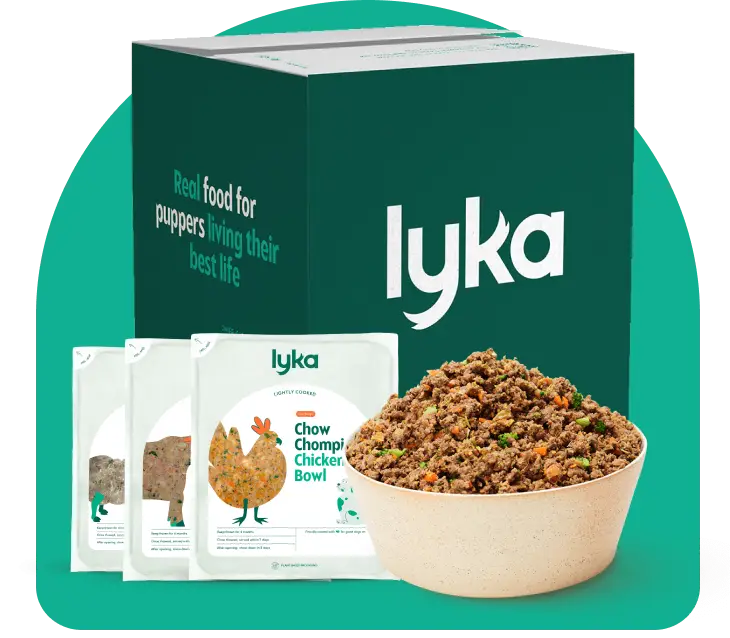
Lyka’s approach incorporates these realities through high satiety nutrition, pre-portioned meals, integrated treats, and recipe rotation. This supports adherence without compromising outcomes.
Weight loss that fits into daily life is weight loss that lasts.
Webinar
👉 Watch the full webinar, Rethinking Canine Weight Management: More than a Calorie Equation with Dr Géraldine Blanchard.
)
)
)
)