)
)
Key summary
Isn’t “complete and balanced” enough?
Complete and balanced tells us that a diet provides the essential nutrients required for a particular life stage, in appropriate amounts and ratios. Under AAFCO standards, this can be demonstrated by meeting the Dog Food Nutrient Profiles, which set minimum levels for required nutrients and maximum levels for some, or through an AAFCO feeding trial. These standards are fundamental for nutritional adequacy, but they do not tell us everything about digestion, metabolic response, the gut microbiome, or the effects of processing.
What do we mean by food format?
Food format includes moisture content, macronutrient profile, ingredient structure, and processing method. Different food formats can deliver nutrients in very different ways.
Does fresh automatically mean better?
No. “Fresh” describes a food format, not a guarantee of nutritional quality. It can include professionally formulated diets or home-cooked diets. Fresh should also not be treated as synonymous with raw. Gently cooked fresh diets and raw diets differ in formulation, processing, and food-safety considerations.
What does the research show?
Recent studies have identified differences in stool quality, microbiome diversity, post-meal glucose responses, and circulating metabolic markers between dogs fed fresh or minimally processed diets and those fed extruded diets.
What should vets focus on?
Rather than asking whether a diet is simply fresh or kibble, look first at nutritional adequacy and suitability for the individual patient, then at how the diet is formulated, processed, and tested.
Beyond Complete and Balanced: Why Food Format Matters
For decades, the central question in canine nutrition was relatively straightforward: does this diet provide all the nutrients a dog needs?
That question remains essential. A diet must be complete, balanced, and safe before we consider anything else. But nutritional adequacy is only the beginning of the conversation.
Emerging research is now examining a broader question: can two nutritionally complete diets produce different effects on digestion, metabolism, and the gut microbiome because of how they are formulated and processed?
In this first article in our three-part series, The Science of Fresh: Looking Beyond Complete and Balanced, we explore why how the diet is formulated, what it contains, and how it is processed matter as much as the nutrients listed on its label.
Complete and balanced is the starting line
Modern pet nutrition has made enormous progress in preventing nutrient deficiencies. Commercial diets can provide the vitamins, minerals, amino acids, and fatty acids required to support growth, maintenance, and reproduction.
But meeting those standards does not mean every complete diet has the same physiological effect.
Consider two meals that both contain sufficient protein, fat, vitamins, and minerals. One may be dry, carbohydrate-rich, and cooked at high temperatures to create a shelf-stable product. The other may be moisture-rich, higher in protein, and gently cooked before being frozen.
Both may be nutritionally complete, yet their physical structure and macronutrient profile (referred to as the food matrix), and processing history are very different.
That is where the nutrition conversation is beginning to shift. The question has evolved from “Is this diet complete and balanced?” to “How does food format and composition influence physiology, metabolism, and the gut environment?”
Fresh can mean different things
One of the challenges in discussing fresh feeding is that “fresh” has no single clinical definition.
The term may be used to describe:
Commercial gently-cooked diets formulated to recognised nutritional standards
Raw meat-based commercial diets
Home-cooked recipes developed by a veterinary nutritionist
Improvised combinations of meat, vegetables, and supplements
Foods marketed as fresh without meaningful feeding or safety data
A carefully formulated, gently-cooked commercial diet may undergo feeding trials, digestibility studies, pathogen testing, and quality-control procedures. A home-prepared recipe may appear similar in the bowl while providing inadequate calcium, trace minerals, or essential fatty acids.
Raw feeding introduces additional considerations, including bacterial contamination, parasite exposure, and risks to vulnerable members of the household if not prepared safely.
So the more useful clinical question is whether the diet is correctly formulated, appropriately processed, tested for safety, and supported by evidence.
Processing may influence the finished food
Processing is necessary to make many foods safe, digestible, and practical. Cooking can destroy pathogens, improve the digestibility of some ingredients, and extend storage life. Even chopping, freezing, and mixing are forms of processing.
Processing itself is not the problem. What matters is how food is processed.
Higher-temperature processing can alter the food matrix, affect sensitive nutrients, and contribute to the formation of advanced glycation end products, or AGEs. These compounds are produced when sugars react with proteins or fats during heating.
“[AGEs] help contribute to palatability and aroma, but in humans and some animals they have been intensely studied and associated with chronic inflammation, renal disease, diabetes, and cancer. In dogs, the health outcomes are underexplored at this stage.” – Dr. Alex England
A year-long study in senior dogs found lower circulating levels of two AGE-related compounds, CML and pyrraline, in dogs fed a fresh diet compared with dogs fed an extruded diet. The fresh-fed dogs also had higher circulating EPA, DHA, and several antioxidant compounds.
Total serum AGEs in dogs eating different diets
)
What controlled research tells us
A University of Sydney randomised crossover study compared a minimally processed fresh diet with an extruded kibble diet in 23 healthy adult dogs.
Because each dog ate both diets during different study periods, the researchers could reduce some of the variation between individual dogs.
During the fresh-diet period, the dogs demonstrated:
Improved faecal consistency
Greater gut microbiome alpha diversity
Lower post-prandial glucose responses
Lower GIP responses
Differences in post-meal PYY signalling
The dogs digested and responded to the two nutritionally complete diets differently. These findings challenge the assumption that nutritional adequacy alone is sufficient when evaluating canine diets.
The microbiome adds another layer
The gut microbiome is the community of bacteria and other microorganisms living within the gastrointestinal tract.
“Put very simply, a healthy microbiome is diverse: there are a lot of different kinds of bacteria all providing their own different functions, and there are more beneficial symbionts than harmful pathobionts.” – Dr. Alex England
These organisms interact with dietary fibre, proteins, bile acids, and metabolic by-products. In turn, they produce compounds that may influence intestinal health, immune signalling, and metabolism.
) Diet is one of the strongest influences on the gut microbiome.
Diet is one of the strongest influences on the gut microbiome.
In the University of Sydney study, dogs fed the fresh diet had greater alpha diversity, a measure of the range and distribution of microbes within the gut. Greater diversity is often associated with a more resilient gut ecosystem.
The clinical meaning of these microbiome changes requires further study, as the activity of the organisms present and the metabolites they produce may be just as important as the number of species identified.
For now, the important finding is that changing food format and composition produced measurable changes within a relatively short feeding period. That gives us another reason to think beyond the nutrient panel alone.
A broader way to assess canine diets
When assessing a diet, we can consider:
Is the diet complete and balanced?
Who formulated it?
What are its protein, carbohydrate, fat, and fibre profiles?
How is it processed and stored?
What safety and feeding data are available?
Has the finished diet actually been studied in dogs?
Is it appropriate for this individual patient?
A well-formulated kibble may be more appropriate than an unbalanced fresh diet. A tested, gently-cooked diet may offer advantages over a dry diet for a particular dog.
Where Lyka fits
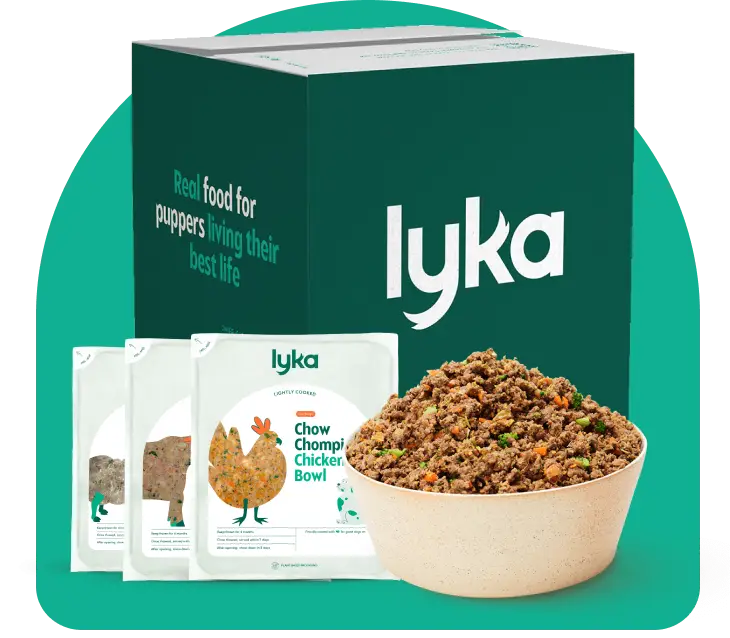
Lyka’s meals are designed to combine the essential foundations of canine nutrition with the emerging science around food format.
The meals are complete and balanced for all life stages and have undergone an AAFCO feeding trial. Lyka has also conducted digestibility, palatability, and urinary relative supersaturation testing, alongside the randomised crossover study with the University of Sydney and commitment to $10m investment into scientific research by 2030.
Meals are gently cooked in HACCP-certified Australian facilities, independently tested for pathogens, and supplied in pre-portioned servings based on an individualised feeding model.
Final thoughts
Fresh diets should be held to the same standard as any other clinical nutrition option, with safety data, appropriate testing, and evidence behind the finished product.
The research already tells us one important thing: nutritional adequacy is the foundation, not the whole story.
Webinar
👉 Watch the full webinar on The science of fresh: from bowl to microbiome
)
)
)
)