


Lyka's vet guide to healthy dog weight (with charts and video)
Not sure if your dog is the right weight? Use our vet-endorsed body condition chart to find out.
Read more 
German Shepherds are always switched on — moving, working, and alert. Supporting that level of activity starts with nutrition that keeps their body strong and balanced.
Discover how Lyka’s fresh dog food for German Shepherds supports joints, digestion, and overall health.
The best dog food for German Shepherds is complete and balanced and easy to digest.
As a strong, working breed, German Shepherds need quality protein for lean muscle and targeted nutrients to support joint health. Fresh, gently cooked dog food is highly digestible, helping nutrients be absorbed where they’re needed most.
While dry food is ultra-processed and low in moisture, and raw diets can be difficult to digest for some dogs, fresh food offers a complete, convenient way to support long-term health.
When comparing fresh dog food options for your German Shepherd, look for:
High-quality animal protein as a primary ingredient – preferably human-grade
Essential fatty acids, including omega-3 and omega-6 at a healthy ratio (Lyka use a ratio of 1.1:1 - 4.4:1)
Real food ingredients such as vegetables, berries, and superfoods
Essential vitamins and minerals like Vitamins B, D, E and zinc, magnesium, and potassium.
Formulation that meets recognised nutritional standards such as AAFCO or FEDIAF
Diets made without artificial preservatives, added sugars or unnecessary fillers like beet pulp.

Lyka’s fresh dog food is designed for active dogs like German Shepherds. Each meal is formulated by Board-Certified Veterinary Nutritionists for targeted support across key areas of German Shepherd health.
From strong joints to healthy skin, Lyka plays a key role in promoting long-term wellness for German Shepherds.


Healthier dog food, delivered conveniently on a flexible plan.

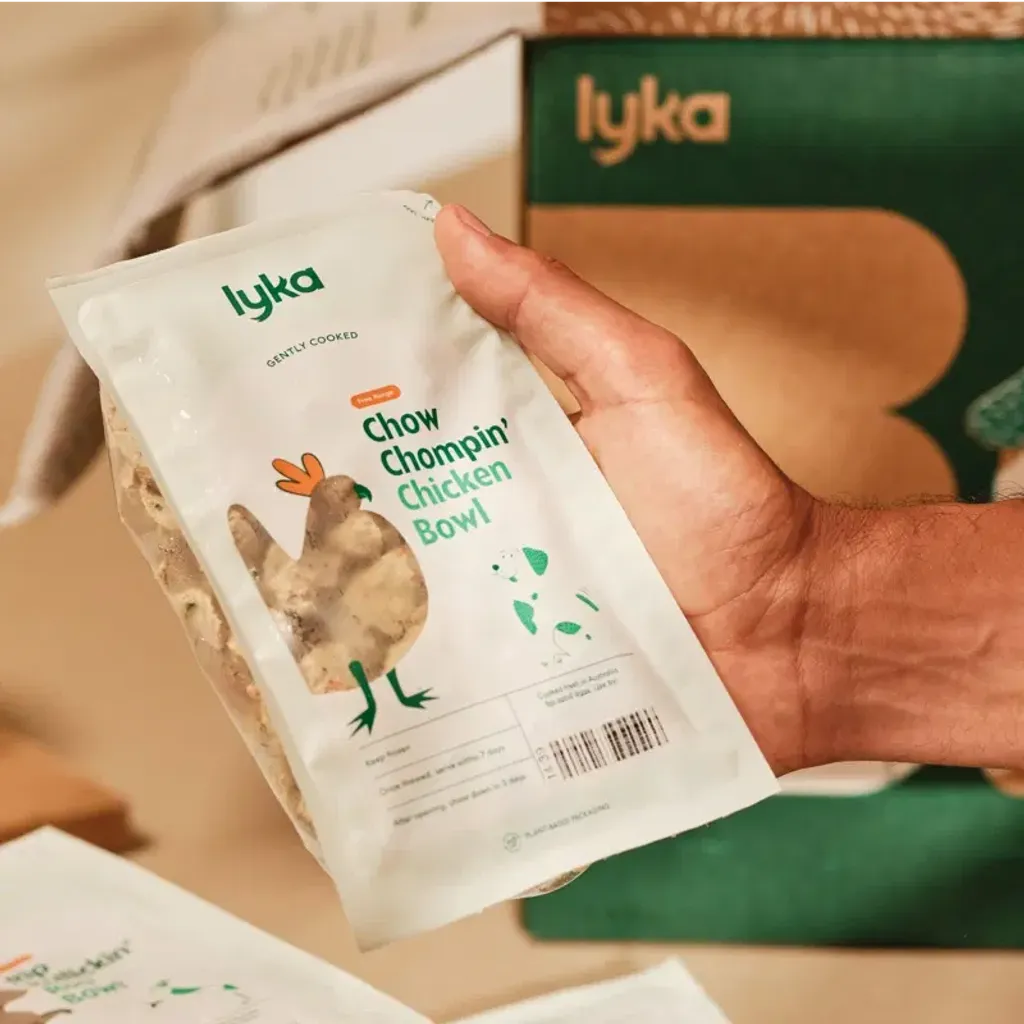
Just peel and serve.
Get a custom meal plan based on your dog’s health needs.
Meals are prepared daily, snap-frozen and delivered direct.
Switch up meals, skip an order, pause, delay or cancel.
How much a German Shepherd should eat depends on age, body weight, activity level, and their weight goals. A practical approach is to start with portion guidance from a complete and balanced diet, then adjust based on your vet’s advice.
Lyka takes the guesswork out of feeding by creating a custom-portioned meal plan for your dog.
Different dog breeds don't need different food, as long as their meals provide for their daily nutritional and energy needs. Breed traits — such as activity level and predisposition to certain health conditions — can influence nutritional needs.
When choosing German Shepherd dog food, look for minimally processed food made with real, whole ingredients and formulated to be nutritionally complete and balanced.
Kibble is convenient but highly processed. Raw diets retain nutrients but may not suit all dogs. Home-cooked meals can lack balance unless guided by a veterinary nutritionist.
Lyka meals are formulated by Board-Certified Veterinary Nutritionists and made with gently cooked, real food ingredients.
Active breeds, like German Shepherds, benefit from nutrients that support recovery and mobility. Omega-3 fatty acids help manage inflammation, while antioxidants support cellular health. Nutrients from animal protein, such as taurine and L-carnitine also play a role in supporting heart health and energy metabolism.
Not necessarily. If your dog has a grain allergy or sensitivity, then a grain-free diet can help. Some grain-free formulations replaced grain with a high proportion of legumes that may cause digestive issues and have been associated with dilated cardiomyopathy (DCM). What matters more for your German Shepherd is the overall quality of a complete and balanced diet.
German Shepherds benefit from a diet that is complete and balanced, with high protein, moderate healthy fats, and low-GI carbohydrates to support steady energy and healthy body condition.
German Shepherds need the right kind of diet to fuel their activity levels without adding unnecessary weight.
Diets containing high-glycaemic index carbohydrates are rapidly digested and can contribute to energy fluctuations and weight gain if not balanced with activity. Low-glycaemic index carbs provide a steadier release of energy.
We want our dogs to live a long and healthy life. It’s much easier to maintain health than treat conditions when they arise. Feeding them a fresh food diet from an early age is a practical way to support long-term wellbeing as part of a holistic approach that also includes regular vet care, dental care, exercise, and keeping them at a healthy weight. But it’s never too late for your German Shepherd to benefit from a change to fresh.
If your German Shepherd has a complete and balanced, nutrient-dense diet, like Lyka, they’ll get all their daily requirements. But if your pup has a health condition, it can be helpful to give them targeted supplements for an extra boost.
Lyka’s Joint Supplement contains green lipped mussels, which are rich in Omega-3, glycosaminoglycans and chondroitin to amplify the benefits of Lyka meals to support joint health.
German Shepherds have a double coat that’s known for intense shedding. Nutrient deficiencies in your dog’s diet or malabsorption of nutrients can lead to dry, brittle coats that shed dead hair more often.
A complete and balanced diet with quality protein and essential fatty acids can help support healthy skin and a glossy coat. Pair that with regular brushing to help manage shedding.


